
ESHPI

2025 AT-A-GLANCE

As we reflect back on last year, it was one filled with perseverance, comradery, and creativity that fuels our motivation for the year to come. Sharing this special-edition 2025 Year-in-Review newsletter with the ESHPI community now, we hope that it inspires you. We want to extend our sincere thanks to each of you for your invaluable contributions to ESHPI over the past year. Your expertise and dedication continue to serve as a beacon for the work of our community of state health policymakers and researchers. This year, we are hopeful for as many solutions as there are challenges ahead. Together, we will continue to generate and disseminate meaningful evidence to strengthen the health services research field and improve health and health outcomes for all.  
‍
- Susan, Amanda, Annaliese, Caroline, and Zoe


Below you will find activities, publications, events, and more from you all in the ESHPI community:

20th Anniversary for MMDN

The MMDN celebrated two decades of “sharing senselessly and stealing shamelessly” at their annual meeting on November 18 in Alexandria, VA. Thirty-five MMDs from 27 states connected to discuss the implications of work requirement policies in Medicaid, with a focus on OBBA regulations, ways to enhance their decision-making processes through effective collaboration with partners, strategies for addressing high-cost drugs and opportunities to impact severe maternal morbidity (SMM) and the role of Medicaid doula benefits in improving postpartum health and advancing racial equity. The day-long meeting culminated in a 20th anniversary reception, celebrating with friends and family who have supported the two-decades long journey and championed our successful execution.  

SUPLN’s Annual Meeting had its Greatest Turnout Since the Pandemic

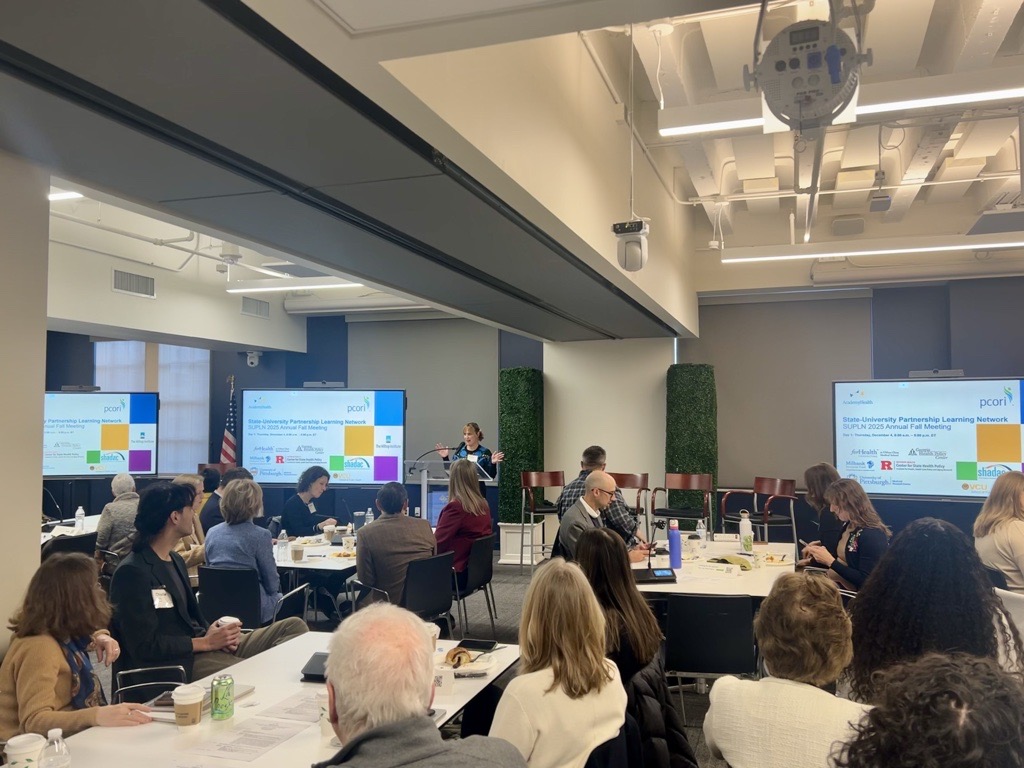
This year, SUPLN hosted their annual meeting with record attendance: 66 members from 20 state-university partnerships. Attendees tackled pressing topics such as H.R. 1 community engagement requirements and rural health, including state approaches to rural health transformation grants, and convened on foundational topics with new insights and meaning such as prenatal, maternal, and behavioral health. There was increasing appetite to incorporate Medicaid provider and enrollee perspectives in 2026, and attendees left having each had the opportunity to meet one-on-one with funder colleagues from five organizations, including the SCAN Foundation, PCORI, Arnold Ventures, MACPAC, and Peterson Center on Healthcare, to discuss budding collaborative opportunities.

The 2025 MODRN Annual Meeting

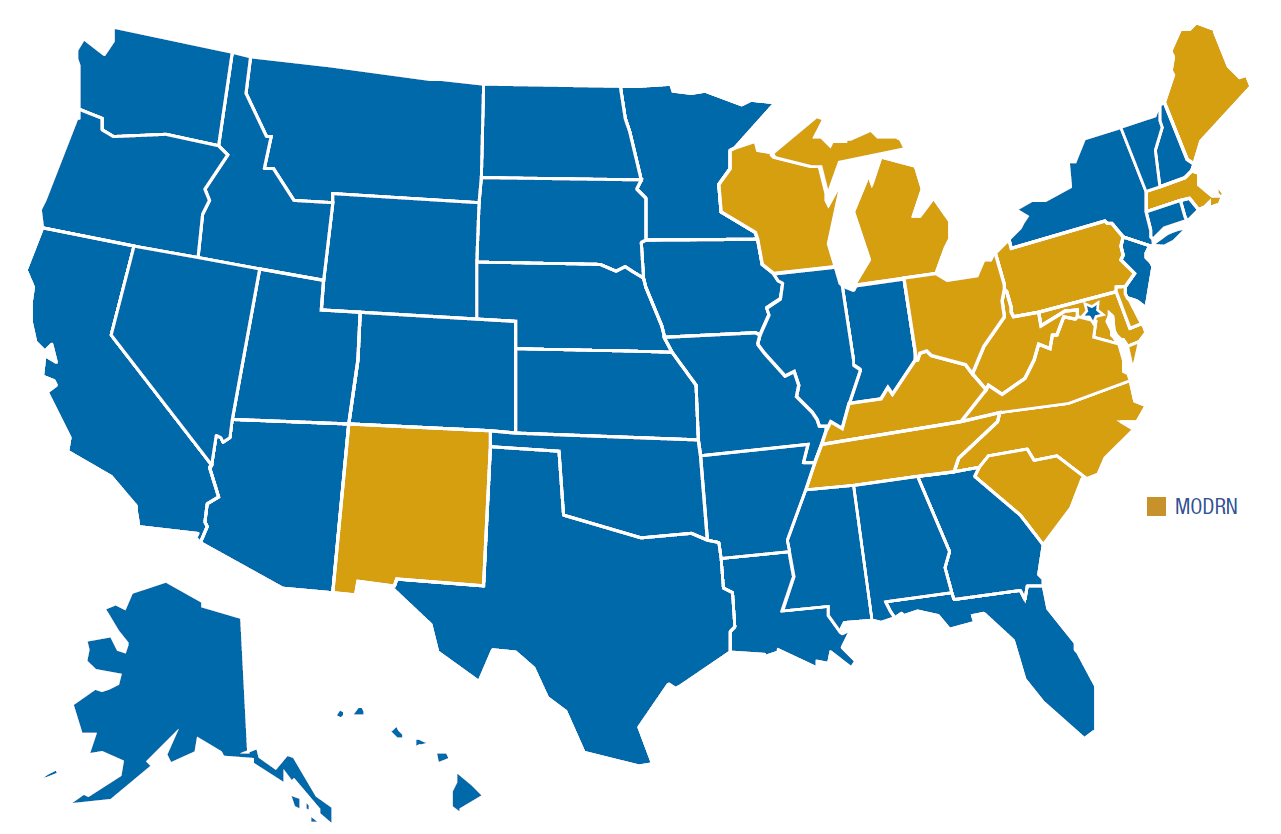
Representatives from our Medicaid Outcomes Distributed Research Network (MODRN) met the day before the SUPLN Annual Meeting to discuss ongoing research projects, future opportunities for the network, and to welcome a new state to the network: New Mexico! It was heartening to hear of the strong progress of existing projects while looking ahead to the bright future of this network.

NETWORKS, PUBLICATIONS, AND PROJECTS

Thank you to our ESHPI Networks’ 2025 leadership.

ESHPI Networks' 2025 Leadership

SUPLN Steering Committee

  • Alice Middleton, JD, Chair, The Hilltop Institute (MD)
  • Katie Commey, MPH, Vice Chair, Michigan Department of Health and Human Services (MI)
  • Marisa Elena Domino, PhD, Arizona State University (AZ)
  • Lindsey Hammerslag, PhD, University of Kentucky (KY)
  • Katie Horneffer, MPH, North Carolina Medicaid (NC)
  • Hyunjee Kim, PhD, Oregon Health & Science University (OR)
  • Joel Norwood, JD, Connecticut Department of Social Services (CT)
  • Sherry Nykiel, MD, Delaware Division of Medicaid and Medical Assistance (DE)
  • Cynthia Parsons, MA, West Virginia Medicaid (WV)

MMDN Steering Committee

  • Douglas Fish, MD, Chair, New York State Department of Health (NY)
  • Jeff Huebner, MD, FAAFP, Vice Chair, Wisconsin Department of Health Services (WI)
  • John Boston, DO, CMD, Medicaid Medical Director, Department of Health, Division of Health Care Services, Alaska (AK)
  • Krishna Upadhya, MD, MPH, Chief Medical Officer, Division of Medicaid and Medical Assistance, Delaware Medicaid (DE)
  • Janelle White, MD, MHCM, Chief MedicalOfficer, North Carolina Department of Health and Human Services (NC)
  • Chris Chen, MD, MBA, Washington State HealthCare Authority, Chair Emeritus (WA)

MODRN Steering Committee  

  • Jeff Schiff, MD, MBA, Chair, AcademyHealth (DC)
  • Kelley Beloff, MBA, MSW, Ohio Department of Medicaid (OH)
  • Meredith Lawler, MPH, Maryland Medicaid (MD); Alternate: Alyssa Brown, JD, Maryland Medicaid
  • Katherine Commey, MPH, Michigan Department of Health & Human Services (MI)
  • Jason Lowe, MSW, Department of Medical Assistance Services (VA)
  • Cynthia Parsons, West Virginia Medicaid (WV)
  • Kathryn Horneffer, MPH, North Carolina Department of Health Benefits (NC); Alternate: Tess Koenigsmark, MPP, North Carolina Department of Health Benefits
  • Jeff Huebner, MD, FAAFP, Wisconsin Department of Health Services (WI)
  • David Jorgenson, MS, MaineCare (ME)
  • Dave Kelley, MD, MPA, Pennsylvania Department of Human Services (PA)
  • Tess Koenigsmark, MPP, North Carolina Department of Health Benefits (NC)
  • Cooper Lloyd, MD, MPH, TennCare (TN)
  • Sherry Nykiel, MD, Delaware Division of Medicaid and Medical Assistance (DE)
  • Cynthia Parsons, MA, West Virginia Medicaid (WV)
  • Judy Theriot, MD, Kentucky Cabinet for Health and Family Services (KY)
  • Patricia Witherspoon, MD, South Carolina Medicaid (SC)

MODRN Data  Coordinating Center,
University of Pittsburgh  

  • Julie Donohue, PhD, Lead
  • Chung Cho (Joyce) Chang, PhD
  • Stefanie Junker, MPH
  • Joo Yeon Kim, MPH
  • Christine McClure, EdD, MPPM, MBA
  • Michael Sharbaugh, MPH
  • Lu Tang, PhD

Administrative Coordinating Center, AcademyHealth

  • Susan Kennedy, MSW, MPP, Lead
  • Annaliese Johnson, MPP
  • Caroline Hale
  • Zoe D’Angelo

‍

The MMDN, SUPLN, and MODRN Connect Researchers and Policy Makers from Coast to Coast

  • We held 12 MMDN Open Mic calls on a variety of topics, Medicaid budget trends, improving health for children, youth, and families, engaging primary care, support for un housed individuals, defining medical frailty and more.
  • MMDN members also collectively sent over 1237 listserv messages in the calendar year!
  • The SUPLN held 5 collaboration calls to advance the SUPLN’s strategic plan and respond to pressing needs. Topics included SUPLN summer survey results, Medicaid budget cut impact analyses, SUPLN strategic plan synthesis, among others.
  • The MODRN Steering Committee and Data & Methods Core continued to meet monthly in 2025 to discuss current research, products, and strategy.
  • MODRN partners developed a quality measure, Evaluation of Hepatitis B and C (EHBC), in record time, and presented it to CMS for inclusion in the 2027 Core Set. It was one of only two added!

‍

OUR 2025 PUBLICATIONS

Looking Ahead...

Here's what we'll be working on.

MODRN-EQUIP, funded through the National Institutes of Health (NIH) Helping to End Addiction Long-term (HEAL) Initiative and led by multi-principal investigators (MPIs) Drs. Julie Donohue and Andrew Barnes, is comprised of three projects with focuses on provider-level opioid use disorder (OUD) treatment quality measures, patient-reported outcomes of OUD treatment, and an OUD treatment quality improvement intervention. ESHPI spearheads MODRN-EQUIP’s Administrative Coordinating Center and Engagement Core, coordinating with key stakeholders including individuals with lived experience with OUD and pain, OUD treatment providers, Medicaid Medical Directors, Single State Agency staff, Chief Medical Officers for Managed Care Organizations, and researchers to assist with the project aim of developing and describing provider OUD treatment quality measures that promote equity. In 2025, the MODRN-EQUIP Engagement Core convened the MODRN-EQUIP Advisory Committee twice in addition to several ad-hoc meetings with subsections of the Committee. Engagement activities associated with all three MODRN-EQUIP projects will continue in 2026.

With funding support from the Patient-Centered Outcomes Research Institute (PCORI), ESHPI and the University of Pittsburgh have brought together six Medicaid programs, their university research partners, eight doula programs, and Medicaid enrollees for a first-of-its-kind, five-year project leveraging an innovative distributed research network to advance racial equity in severe maternal morbidity. Throught his project, researchers hope to identify the most effective ways that state Medicaid programs can implement doula care to improve postpartum health among Black people and people of color. In Project DREAM’s second year, we:

  • Completed analysis of the first doula cohort and began engagement with Medicaid enrollees, with the goal to characterize their experiences with state Medicaid doula care benefits.
  • Published a Health Affairs Forefront article, with the help of the DREAM Dissemination Workgroup, on the impact of H.R. 1 on pregnant and postpartum people with Medicaid insurance,
  • And continued to disseminate our study participant newsletter to maintain communications (and avoid attrition) with study participants.

In 2026, we look forward to continued engagement with our many project collaborative partners including our doula organization partners, university research partners, community engagement facilitators from Gray Hall, and our Advisory Committee, who provide a deep bench of expertise and knowledge. We will also finalize the qualitative analysis from the first Medicaid enrollee cohort’s data and hold the second round of focus groups with the doula cohort.

As our T-MSIS Analytic File (TAF)- focused learning network entered its fourth year, we saw even more interest from researchers looking to collaborate and share their experiences in working with these data, expanding our membership to over 400 members across 94 research groups and organizations. The Network continued to convene monthly learning sessions to discuss data management, quality, and methodology among a variety of other specific TAF-related topics and published a check list to assist new users working and publishing with the data. In 2026, the MDLN will continue to support peer-to-peer learning and dialogue among TAF researchers and contribute to the broader HSR community by ensuring the TAF data used in Medicaid research is high quality, timely, and impactful.

In 2025, AcademyHealth continued our partnership with the UNC at Chapel Hill Behavioral Health Workforce Research Center (UNC-BHWRC) by sharing the findings of their eight combined projects over Years 3 & 4 of their broader portfolio focused on supporting the behavioral health workforce and increasing access to quality behavioral health services. For instance, the UNC-BHWRC team published a manuscript in JSTAT examining the proportion of substance use disorder and mental health treatment facilities in the US providing perinatal services, as well as facility-and state-level factors associated with offering such services, revealing that needs persist for policies to promote access to such facilities. These projects address the strategic aims of both the Health Resources and Services Administration (HRSA) - to target funding toward programs and training that improve access to, supply of, distribution, diversity, and quality of behavioral health workforce - and the Substance Abuse and Mental Health Services Administration (SAMHSA) - to strengthen and improve the behavioral health workforce to better serve the behavioral health needs of individuals, communities, and service providers. We look forward to continuing to partner with the team at UNC-BHWRC in 2026 as we disseminate and spotlight their exciting upcoming research projects.

ESHPI’s LTSS Learning Lab

Looming challenges for Medicaid programs stemming from the passage of H.R. 1 and the financial strains it will place on services for critical populations and services, specifically long-term services and supports (LTSS), create a pressing need to connect key state policy decision makers with researchers who have expertise in LTSS, specifically those focused on older adults and people with disabilities. The ESHPI LTSS Learning Lab is facilitating a series of conversations among key stakeholders about how changes in Medicaid program policy priorities, payment models, and policy levers could impact LTSS nationwide. This new affinity group, composed of MMDN and SUPLN members launched in early 2026 to support state policymakers’ need to work with their peers in other states (1) to assess the merits and feasibility of potential changes in covered services, how they are delivered, and other emerging policy options, and (2) to identify those health services research tools and resources that can best inform these decisions.